Product info
Pinion Tales is a whimsical puzzle adventure game for mobile platforms (release date: Dec 2025. App Store, Google Play)
Players need to guide a Hero through tricky obstacles, complete fun mini-tasks, and befriend quirky companions along the journey.
Developer: Silver Monk Studios.
Target audience
– Young Adults to Middle-Aged Adults (18-45): Those who prefer point-and-click adventure games with slower pace to fast-paced action games.
– Teenagers (13-17): PinionTales’ playful and visually engaging environments can also attract younger players, especially those interested in creative and imaginative play.
Game features
– Unique blend of physics-based platforming and interactive puzzle gameplay.
– Surreal puzzle design that sparks creativity and curiosity.
– Companion Mode — team up with charming companions to solve challenges together.
– Relaxing, immersive atmosphere with beautiful, hand-crafted aesthetics.
UX Improvement: Increase player engagement
Objective: Increase early player engagement to improve progression beyond the first puzzle.
Background
Time frame: 40 days
Total players: 83
Players completed First Puzzle: 31
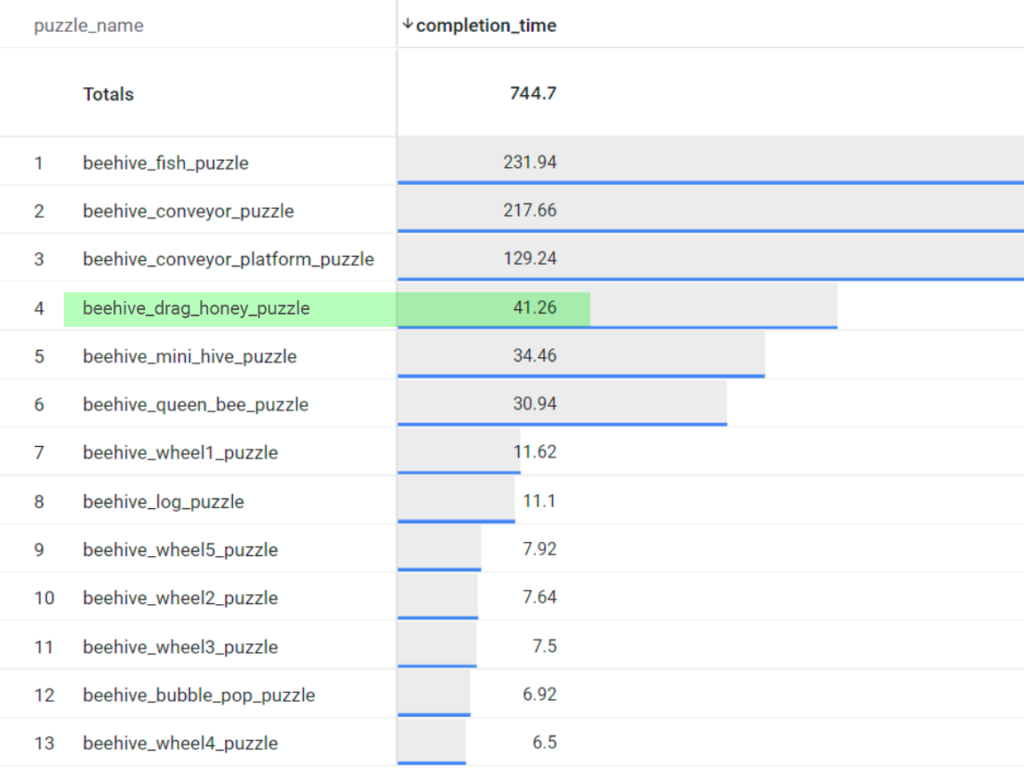
First Puzzle completion time (avg): 41.26s
Quantitative Findings
Funnel analysis indicates a significant drop-off at the first puzzle, with the majority of players failing to progress beyond this point. This early-stage churn negatively impacts Day 1 retention and contributes to low DAU.
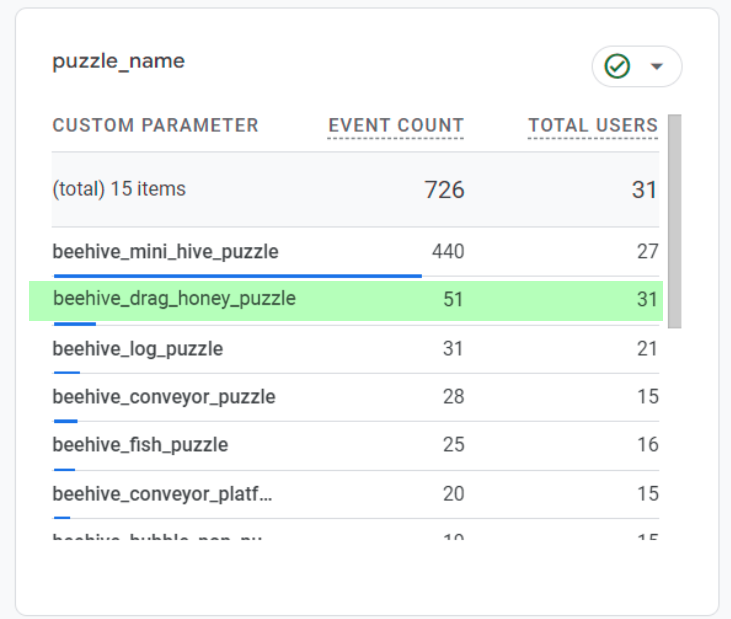
Below is the breakdown of completed puzzles that’s tracked by the ‘puzzle_complete’ event, where the ‘beehive_drag_honey_puzzle’ is the 1st puzzle in the game.
Data shows that the average completion time for the first puzzle is 41.26 seconds, compared to a benchmark of approximately 9 seconds. This average includes results from more experienced players (e.g., developers), indicating that completion times for new players are likely even longer.
Qualitative Findings
Player feedback and observational insights suggest friction in early interactions. Specifically, players reported:
- Slower-than-expected response from interactive elements.
- Some touch areas feel too small which leads to lack of response (which is crucial for Hero-related mechanics).
These findings indicate potential usability and responsiveness issues that may be contributing to early disengagement.
Problem Statement
There is substantial player churn at the first puzzle, suggesting a friction point in the early gameplay experience.
Hypotheses (Potential Causes)
- Onboarding Ineffectiveness: The introductory cutscene may be too long, not explanatory or not engaging enough, potentially failing to prepare players for the puzzle mechanics.
- Cognitive Overload: The first puzzle may be too complex for an introductory level.
- Interaction Friction: Controls and in-game interactions may feel unintuitive or insufficiently responsive (e.g., Hero movement or object manipulation).
Proposed Solutions / Areas for Exploration
- Optimize the Introductory Cutscene: Increase engagement and clarity by incorporating closed captions with voiceover to better explain the narrative.
- Enhance the Hint System: Provide clearer, more contextual guidance to reduce early frustration.
- Improve Interaction Quality: Refine controls and responsiveness to ensure a smoother and more satisfying gameplay experience.
Chosen Solutions and Implementation
Controls and interactions.
The touch target areas for the Hero and several interactive elements were expanded to improve input accuracy and reduce interaction friction.
Additional animation states (‘Excited’ and ‘Sleep’) were introduced for the Hero to enhance character expressiveness and increase player engagement.
Hint system.
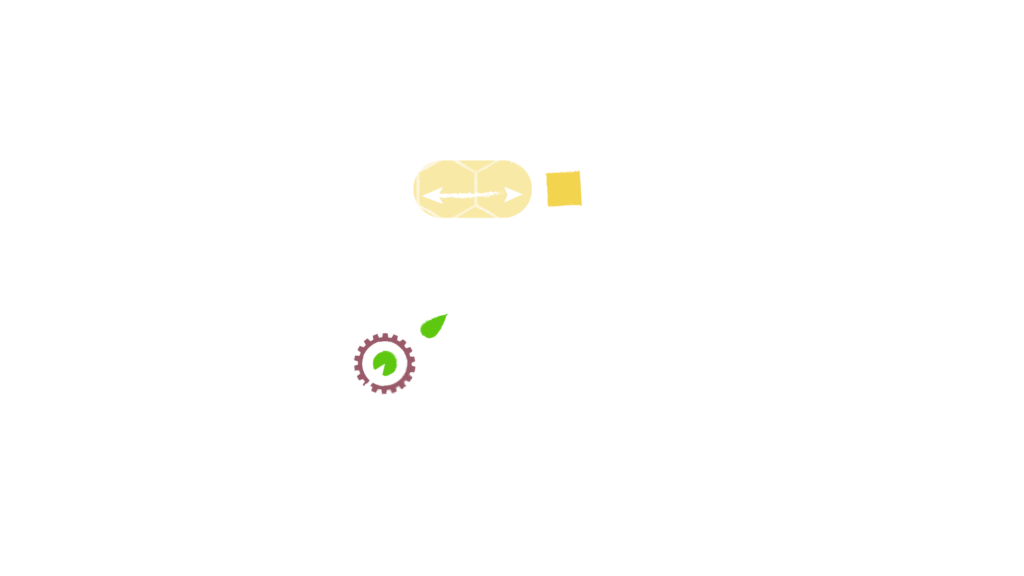
Puzzle 1 hint updated (see the before and after below). More detailed guidance was added to the first hint, intentionally making it highly explanatory to support early engagement and ensure a smooth gameplay introduction.

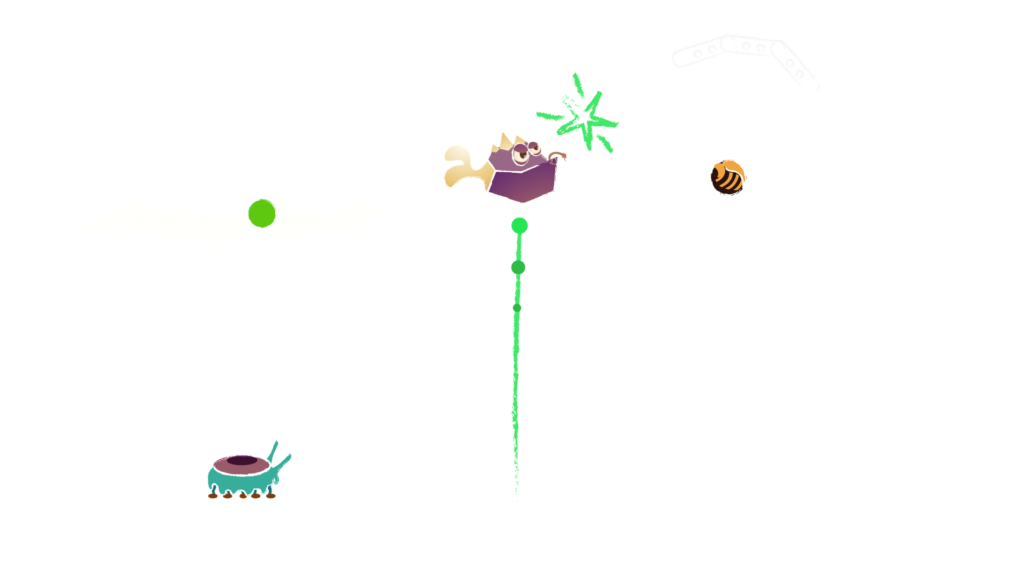
Puzzle 5 hint updated (see the before and after below). Given the puzzle’s complexity, the hint was divided into two parts to improve clarity and reduce cognitive load.
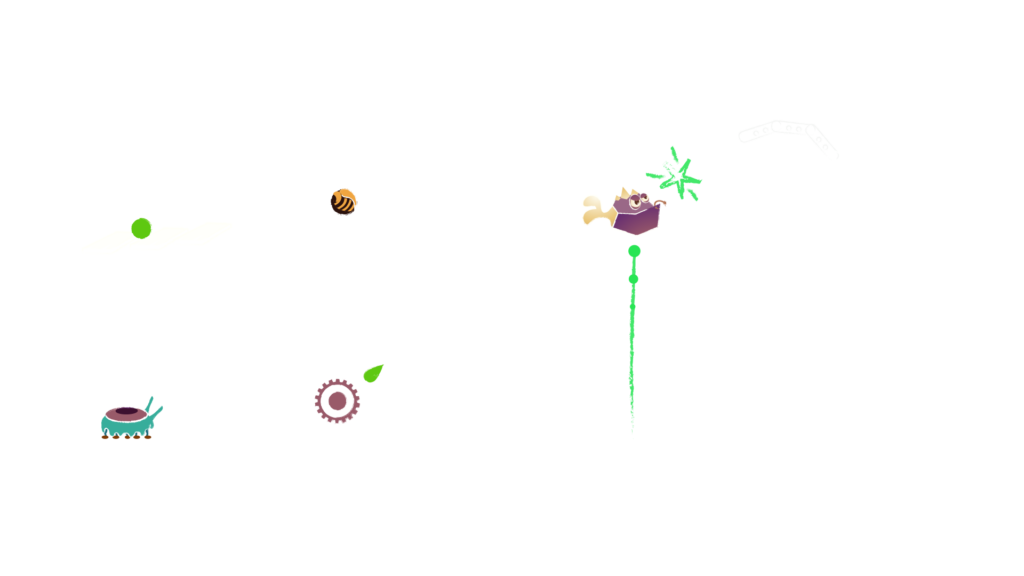
Additionally hints were created for two another puzzles to keep the hint system consistent.
Intro cutscene.
Intro cutscene was updated with closed captions and voiceover. Below are the before and after variants.
Proposed further actions
First-Time User Experience and Usability Testing results (PlaytestCloud)
Players were asked to complete 5 tasks and answer 17 survey questions. It was mainly a usability playtest with some onboarding-related tasks.
Target audience
Cohort 1 (Casual players): Players from United States, Canada, and United Kingdom between 16 and 40 years old playing Mobile Physics games, Hybrid Puzzle games, Casual Puzzle games, Puzzle games, or Cozy games. Skill level: casual players.
Top positive themes
- Players appreciate the unique, engaging intro and attractive visuals
- Music and sfx were described as smooth and enjoyable
Top negative themes
- Insufficient onboarding and unclear tutorials lead to early confusion
- Unresponsive controls cause major frustration and disengagement
- Puzzle goals, affordances, and recovery options are unclear, creating blocks and perceived softlocks
Advice for developers
- Prioritize making onboarding and tutorialization more explicit and accessible, ensuring that early objectives and core mechanics are clearly communicated through in-context guidance rather than optional help menus.
- Review and improve control responsiveness and input mapping, addressing technical issues that cause the character to freeze or become unresponsive.
- Clarify puzzle goals and feedback, and ensure robust recovery mechanisms are in place to prevent players from becoming blocked or perceiving softlocks.
- Focus on these areas to reduce early player confusion, frustration, and disengagement, while retaining the strengths of the game’s presentation and audio design.