Role: UX Designer & UI/Art Team Lead
Team: 2 UI designers, 2 Artists/Illustrators
Duration: ~3 months
Company: Gazeus Games (for Netflix)
Tools: Figma
Stakeholders: Product managers, game designers, Netflix, developers, QA
Skills: Product design, feature design, UX flows, wireframing, notification system design
Product info
Dominoes Café is an free-to-play game created exclusively for Netflix members (2021-2024).
It offers a relaxing, realistic dominoes experience featuring three classic game modes, one-on-one and two-on-two contests, and extensive customization options.
Developer: Gazeus Games.
Target audience
Casual players looking for an accessible, entertaining way to pass the time, including those familiar with classic dominoes and Netflix members who may be new to the genre.
Game features
– Three game modes (Draw, Block, All Fives).
– Three difficulty levels.
– Multiplayer functionality that allows players to compete against others online.
– Customization options for tile and table designs.
– Multiple language options and soundtrack choices.
Feature 1: Core gameplay UX (MVP)
Context
Dominoes Café was developed as a new product that partially inherited functionality from Dominoes Battle, another dominoes game by Gazeus Games. However, the two products served different audiences – Dominoes Battle targeted competitive dominoes players, while Dominoes Café needed to appeal to Netflix’s broader, more casual user base.
Challenge
Adapt an existing competitive dominoes game into a casual-friendly experience that aligns with Netflix’s brand values: accessibility, inclusivity, and broad appeal, while retaining core gameplay depth.
My Role
I was responsible for the end-to-end UX of the MVP and led a small UI/Art team of 2 designers and 2 Artists/Illustrators. I reported to product managers and presented regularly to Netflix stakeholders, developers, game designers and QA.
Key Design Decisions
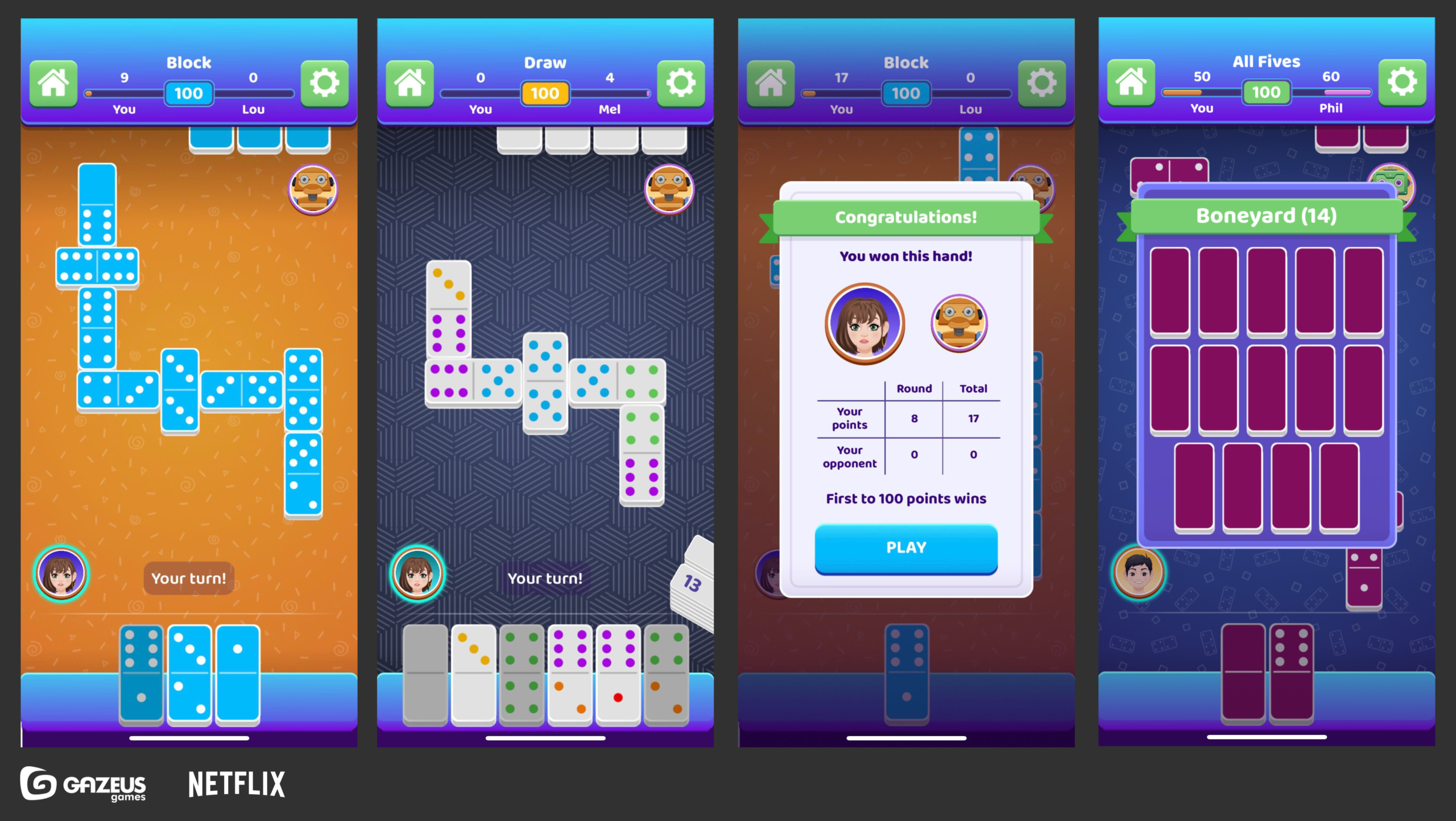
Simplified game modes. The game designer and product manager decided to reduce Dominoes Battle’s four modes (Draw, Block, Fast, All Fives) down to three, removing Fast mode to lower the barrier for casual players. My job was to translate this decision into a UX flow that made the remaining three modes feel clear and approachable – ensuring that mode selection didn’t overwhelm new users while still surfacing enough variety to retain experienced players.
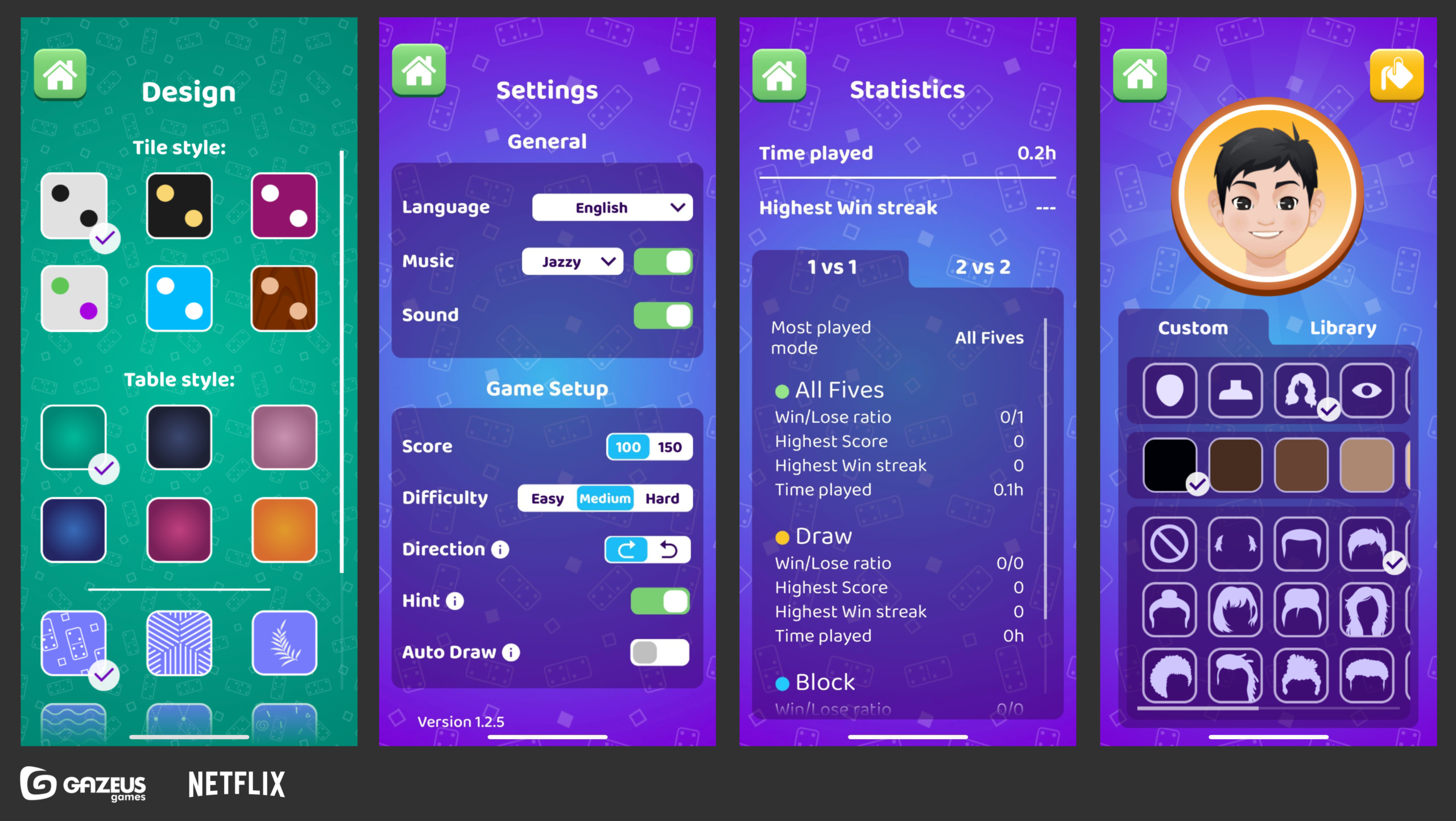
Avatar editor for diverse representation. I proposed adding an avatar customization system to the game. Netflix’s platform values inclusivity and diverse representation, and I saw an opportunity to reflect that directly in the player experience. The avatar editor let players create personalized representations of themselves, which served both as an alignment with Netflix’s brand values and as an early engagement hook – giving players a sense of ownership before their first match.
Localization to 15 languages. Supporting Netflix’s global audience, full localization was a product requirement from the start. From a UX perspective, this shaped how I approached layout decisions, text container sizing, and UI flexibility throughout the wireframing process – ensuring the interface could accommodate varying text lengths and reading patterns across languages.
Customization system (tiles and tables). I was responsible for the customization experience – allowing players to personalize their game space with different tile and table designs. Per Netflix’s requirements, all visual assets in the customization library had to meet accessibility standards, so I ensured that tile and table designs maintained sufficient contrast and readability across the full range of options. This added a layer of constraint to the design process, balancing aesthetic variety with inclusive usability.
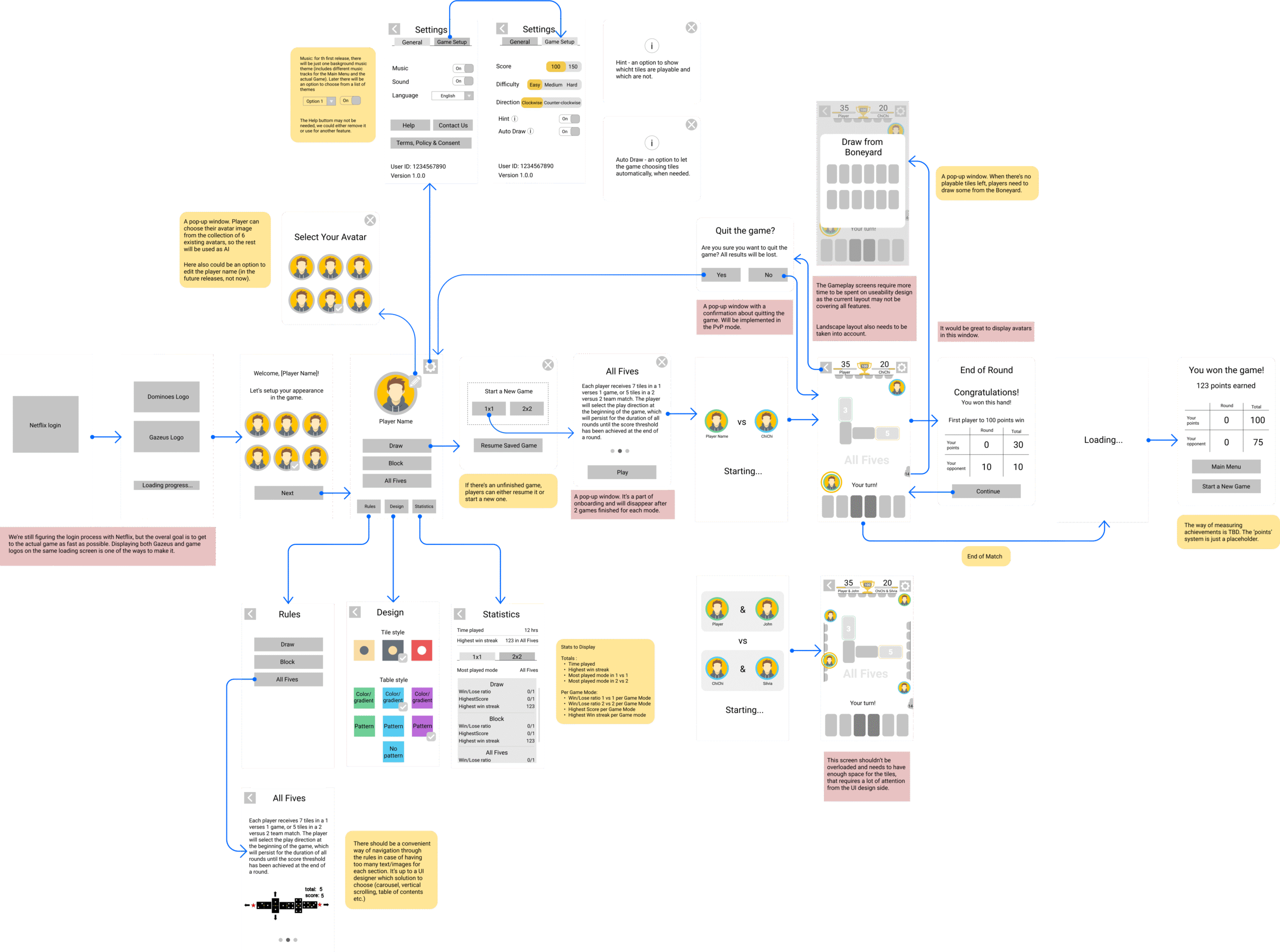
WIREFRAMES
This flow maps the complete first-time user journey – from mode selection through match setup to gameplay. Key decisions included simplified game onboarding for new players (comparing to Dominoes Battle) and surfacing customization options early to encourage personalization.
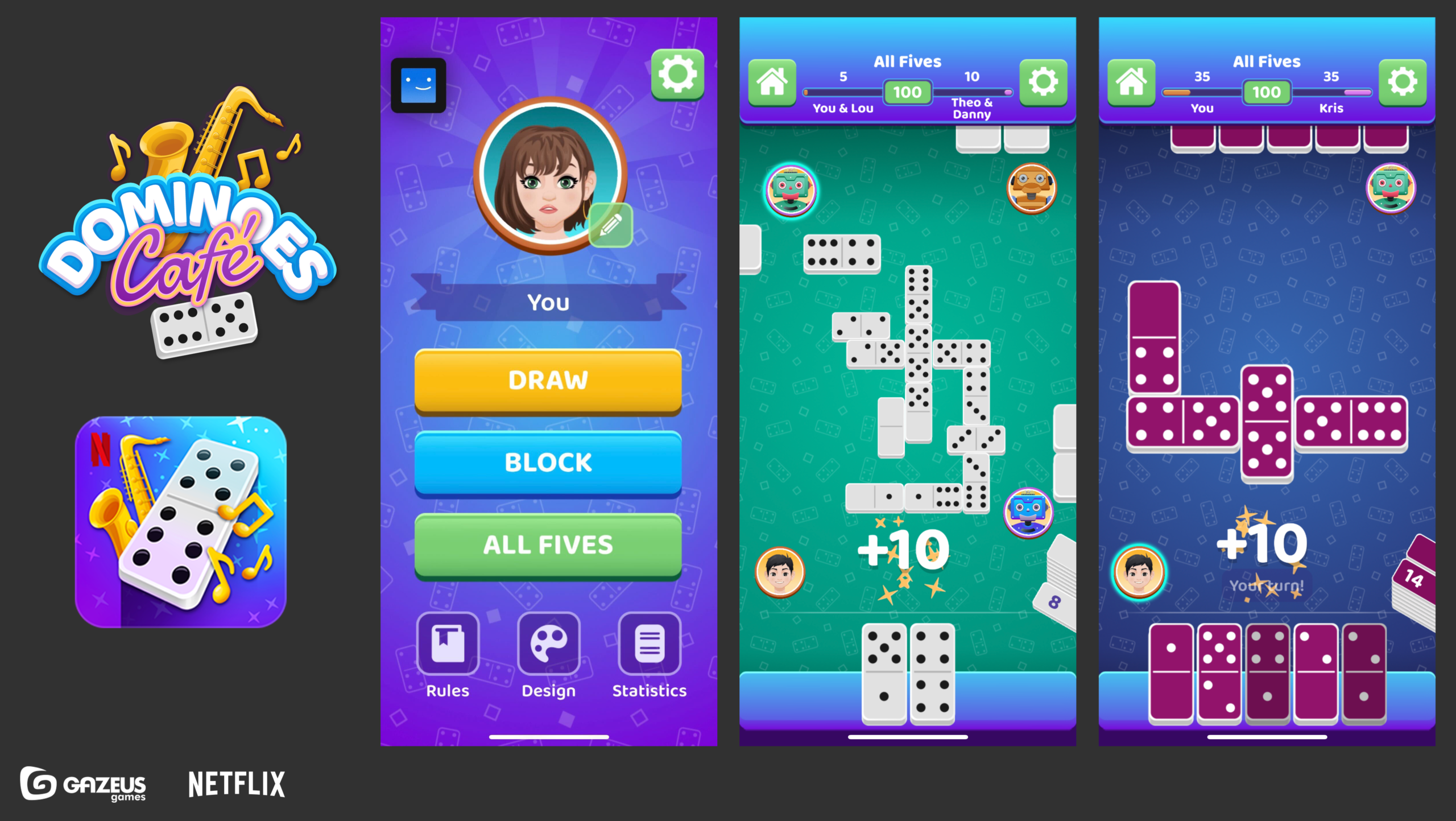
IMPLEMENTATION
The final implementation closely followed the wireframe structure, with refinements to visual hierarchy and interaction feedback based on review sessions with the development team and Netflix stakeholders.
Feature 2: Challenge Mode & Notification System
Context
After the MVP launch, the team wanted to increase player engagement and retention by adding social and competitive features. Two initiatives were prioritized: a 1v1 Challenge Mode and a push notification system.
CHALLENGE MODE
Challenge
Design a multiplayer challenge feature that increases engagement, works within existing technical constraints, and can be shipped quickly to validate the concept before investing in more complex real-time multiplayer.
Approach & Design Rationale
The product and game design team chose an asynchronous challenge model based on technical constraints (real-time multiplayer would have required significant backend investment) and a validation-first strategy – testing player interest in social competition before committing to something more complex.
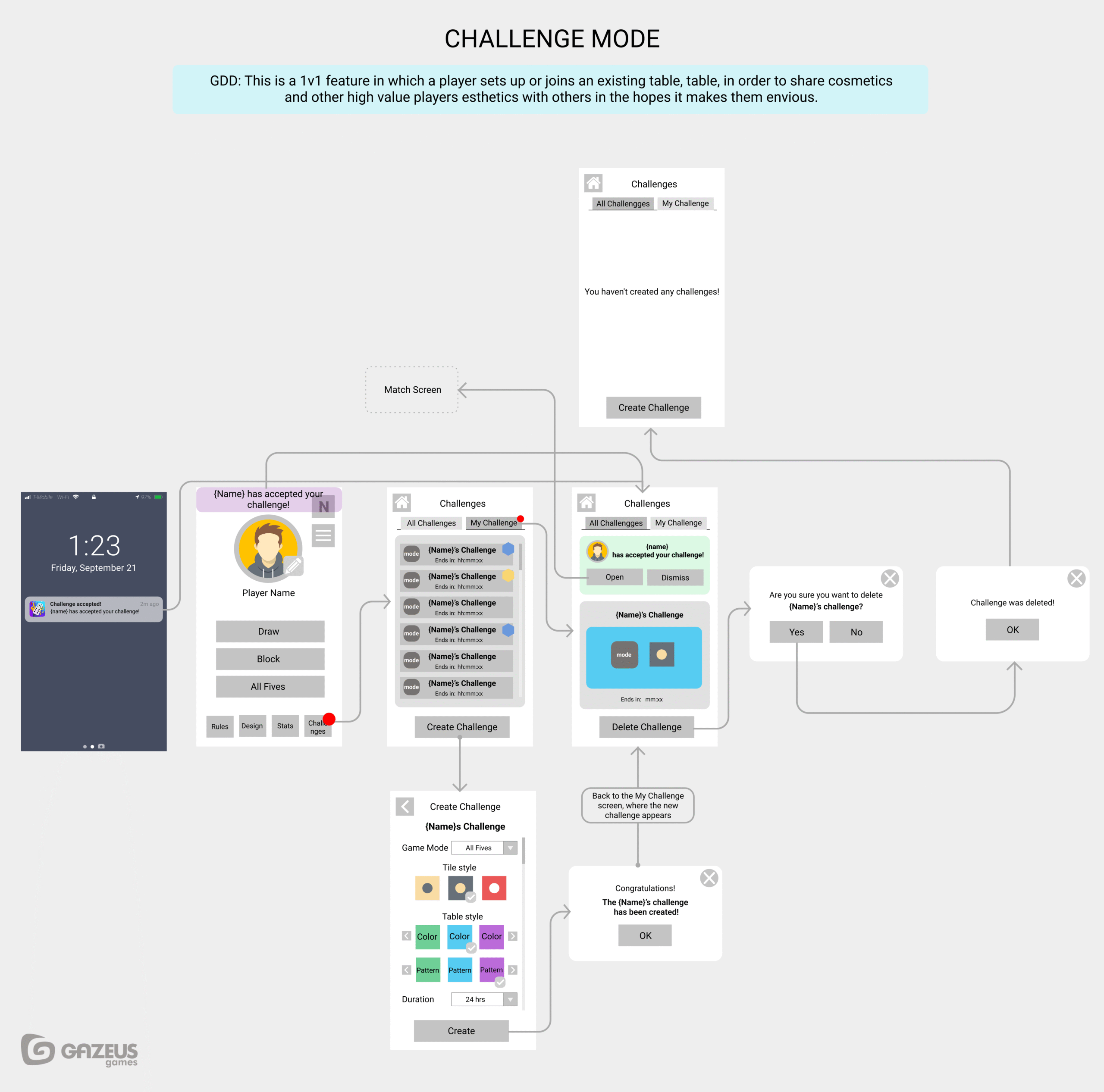
My role was to design the UX for this async model. Rather than a straightforward “play against someone” flow, I built the challenge experience around personalization: players challenge each other by designing a custom game space, picking tile and table styles from the accessibility-compliant asset library I had already developed for the MVP. This turned the challenge into a form of self-expression, not just competition – giving players a reason to engage with the feature beyond the match itself.
WIREFRAMES
The flow shows how a player initiates a challenge by customizing their game space, sends the invitation, and how the recipient experiences the personalized match setup.
NOTIFICATION SYSTEM
Challenge
Design a push notification system that re-engages players without being intrusive, informing them about relevant in-game events while the app is not active.
Approach & Design Rationale
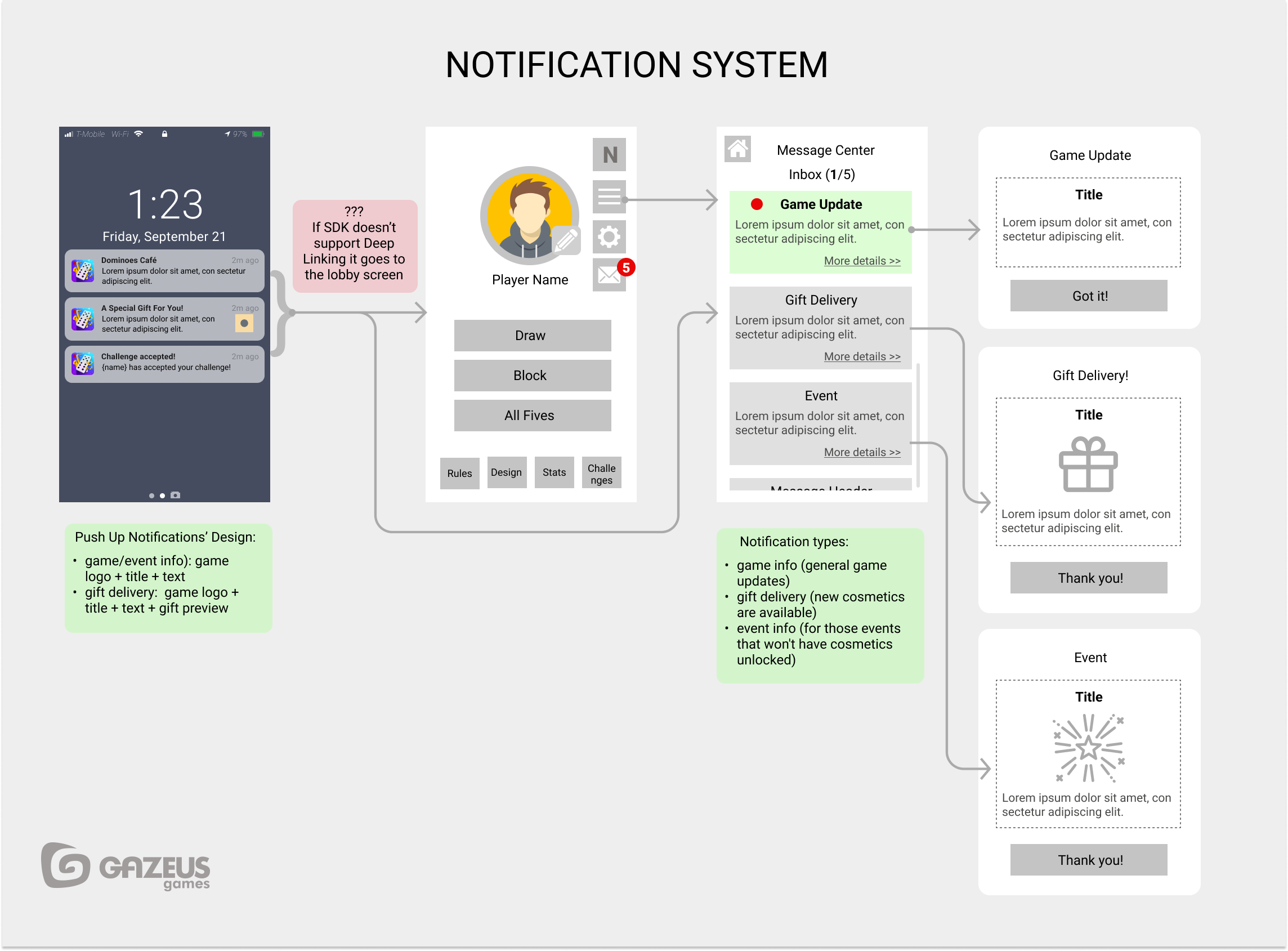
I researched notification best practices and competitor patterns in casual mobile games to identify what drives re-engagement without causing notification fatigue. Based on this research, I recommended triggering notifications for three categories of events:
- New game updates – keeping players informed about fresh content and features.
- Time-based gifts – creating urgency and rewarding returning players.
- Player appreciation rewards – reinforcing positive behavior and encouraging return visits.
The notification content was designed to feel personal and reward-oriented rather than generic or pushy, aligning with the casual, welcoming tone of the overall product.
WIREFRAMES
This wireframe maps notification triggers to player states and outlines the content strategy for each notification type, ensuring messages feel timely and relevant
Outcomes
The MVP UX was approved by Netflix stakeholders and shipped on schedule. The simplified mode structure, inclusive avatar system, and accessible customization options supported Netflix’s goal of making the game welcoming to their broad, global subscriber base. Dominoes Café launched as a Netflix Games exclusive and was available on the platform from 2021 to 2024, serving a casual gaming audience across 15 languages.
Both the Challenge Mode and Notification System shipped successfully and remained part of the product through its lifecycle. The async challenge model validated player interest in social features within the casual dominoes format.