Role: UX Researcher, UX/UI Designer, Game Designer, Art Director, Developer
Team: Solo (founder)
Duration: 6+ months (ongoing)
Company: Silver Monk Studios (self-founded)
Tools: PlaytestCloud, Firebase Analytics, FigJam, Google Sheets, Unity
Skills: UX research, data analysis, usability testing, hint system design, interaction design, game development
Product info
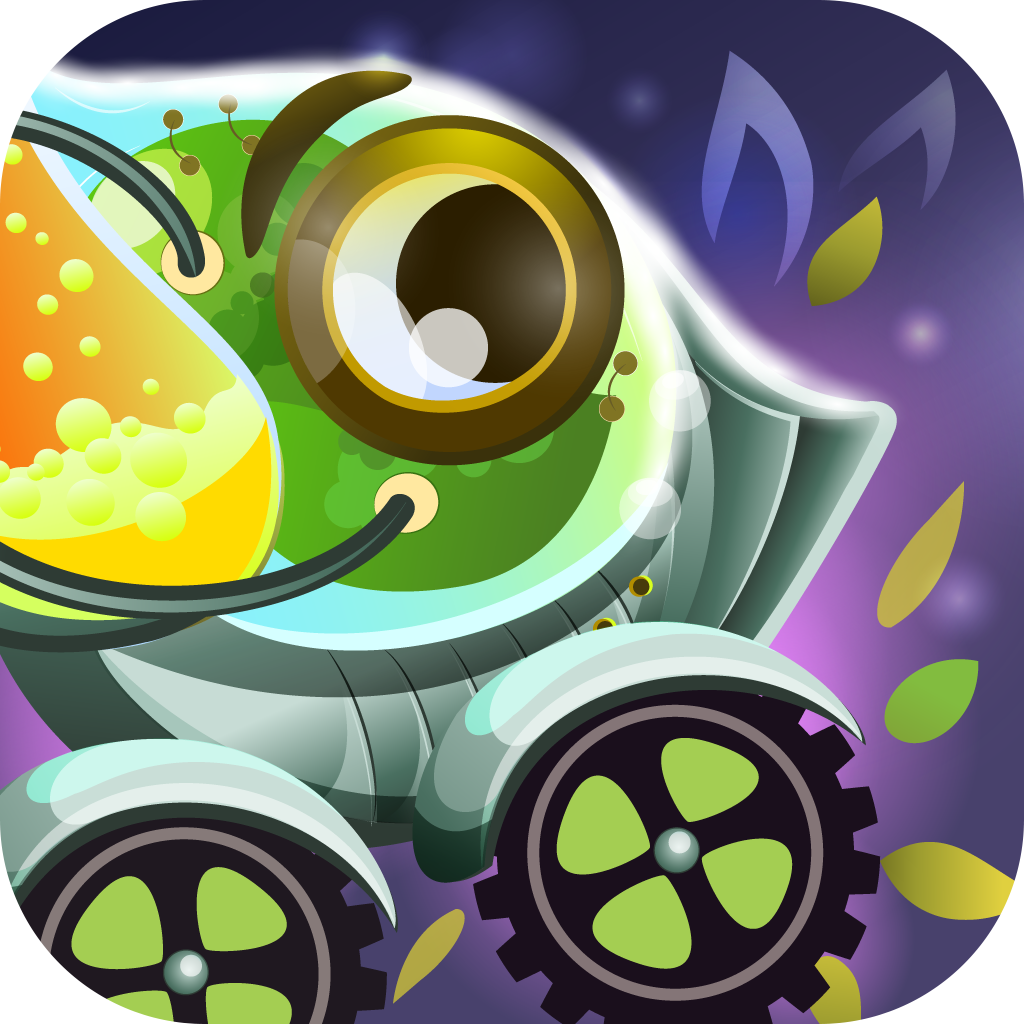
Pinion Tales is a whimsical puzzle adventure game for mobile platforms (release date: Dec 2025. App Store, Google Play)
Players need to guide a Hero through tricky obstacles, complete fun mini-tasks, and befriend quirky companions along the journey.
I founded Silver Monk Studios and serve as the sole designer, researcher, and developer on this project.
Developer: Silver Monk Studios.
Target audience
Young adults to middle-aged adults (18–45) who prefer point-and-click adventures with a slower pace, as well as teenagers (13–17) drawn to creative, visually engaging environments.
Game features
– Unique blend of physics-based platforming and interactive puzzle gameplay.
– Surreal puzzle design that sparks creativity and curiosity.
– Companion Mode – team up with charming companions to solve challenges together.
– Relaxing, immersive atmosphere with beautiful, hand-crafted aesthetics.
Phase 1: Identifying and Addressing Early Player Drop-Off
Context
After launch, analytics revealed a critical problem: most players were not making it past the first puzzle. As the sole researcher and designer on the project, I needed to identify why players were dropping off so early and design solutions that could be implemented quickly within our small-team constraints.
Objective: Increase early player engagement to improve progression beyond the first puzzle.
Background
The Problem
Time frame: 40 days post-launch
Total players: 83
Players who completed the first puzzle: 31
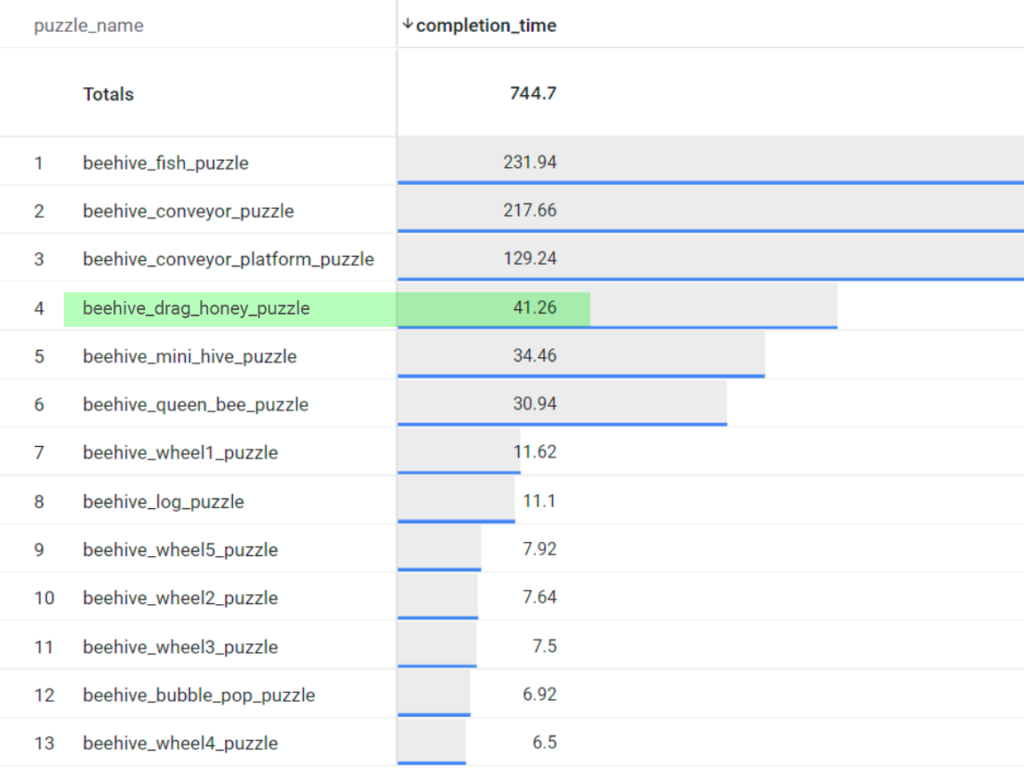
Average first-puzzle completion time: 41.26 seconds (benchmark: ~9 seconds)
Quantitative Findings
Funnel analysis showed a significant drop-off at the first puzzle, with the majority of players failing to progress beyond it. The average completion time was over 4× the benchmark – and since this average included experienced players (developers), real new-player times were likely even worse.
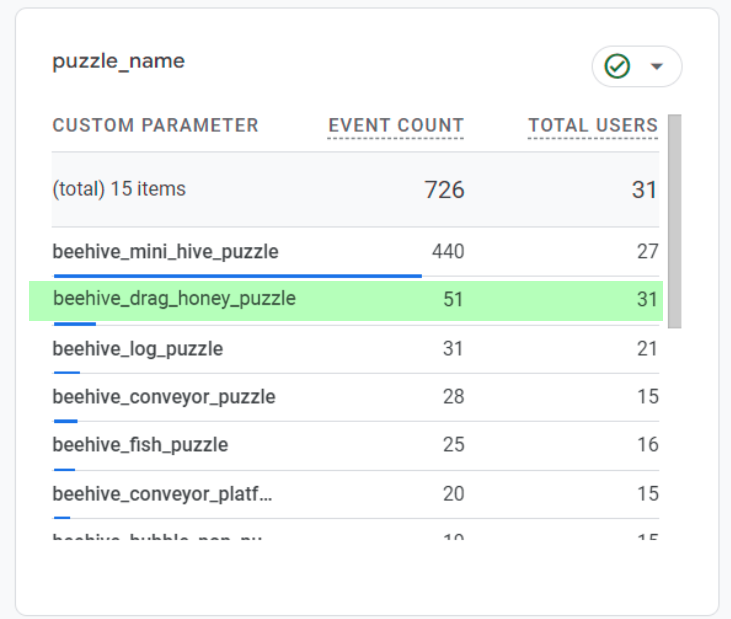
Below is the breakdown of completed puzzles that’s tracked by the ‘puzzle_complete’ event, where the ‘beehive_drag_honey_puzzle’ is the first puzzle in the game.
Data shows that the average completion time for the first puzzle is 41.26 seconds, compared to a benchmark of approximately 9 seconds. This average includes results from more experienced players (e.g., developers), indicating that completion times for new players are likely even longer.
Qualitative Findings
Player feedback and observational insights suggest friction in early interactions. Specifically, player feedback confirmed the quantitative signal:
- Players reported slower-than-expected response from interactive elements.
- Some touch areas felt too small which leads to lack of response (which is crucial for Hero-related mechanics).
These findings indicate potential usability and responsiveness issues that may be contributing to early disengagement.
Problem Statement
There is substantial player churn at the first puzzle, indicating a friction point in the early gameplay experience that undermines Day 1 retention and DAU.
Hypotheses (Potential Causes)
I identified three potential causes:
- Onboarding Ineffectiveness: The introductory cutscene may be too long, not explanatory or not engaging enough, potentially failing to prepare players for the puzzle mechanics.
- Cognitive Overload: The first puzzle may be too complex for an introductory level.
- Interaction Friction: Controls and in-game interactions may feel unintuitive or insufficiently responsive (e.g., Hero movement or object manipulation).
Proposed Solutions: Design & Implementation
1. Controls and Interaction Improvements.
I expanded the touch target areas for the Hero and several interactive elements to improve input accuracy and reduce interaction friction. I also introduced two new animation states for the Hero (“Excited” and “Sleep”) to enhance character expressiveness – giving players more visual feedback that their inputs are registering, and making the character feel more alive during idle moments.
2. Hint System Update.
I updated several hint illustrations to reduce visual complexity and help players progress faster through early puzzles.
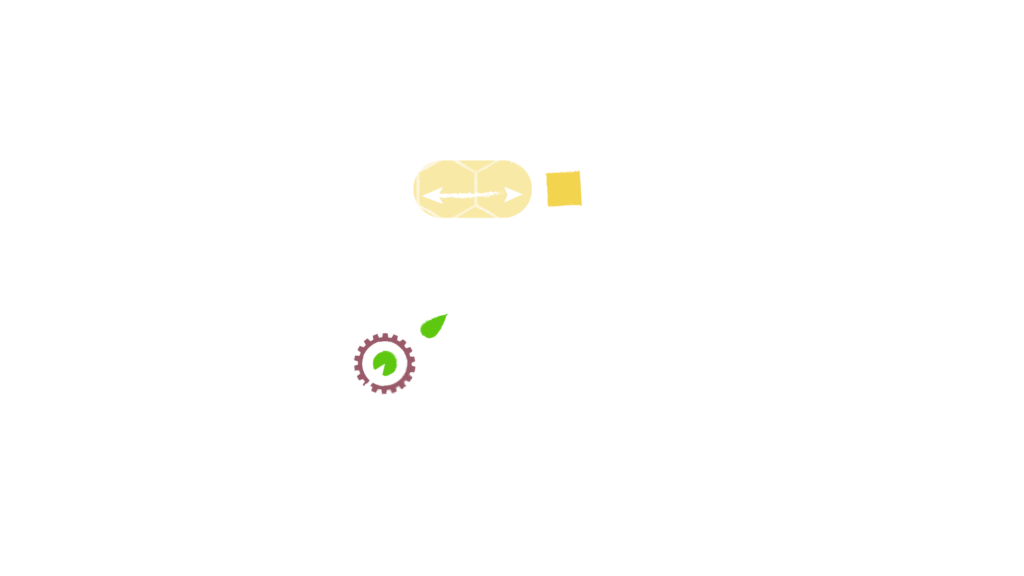
Puzzle 1 hint updated (see the before and after below). I added more detailed guidance to the first hint, intentionally making it highly explanatory to support early engagement and ensure a smooth gameplay introduction.

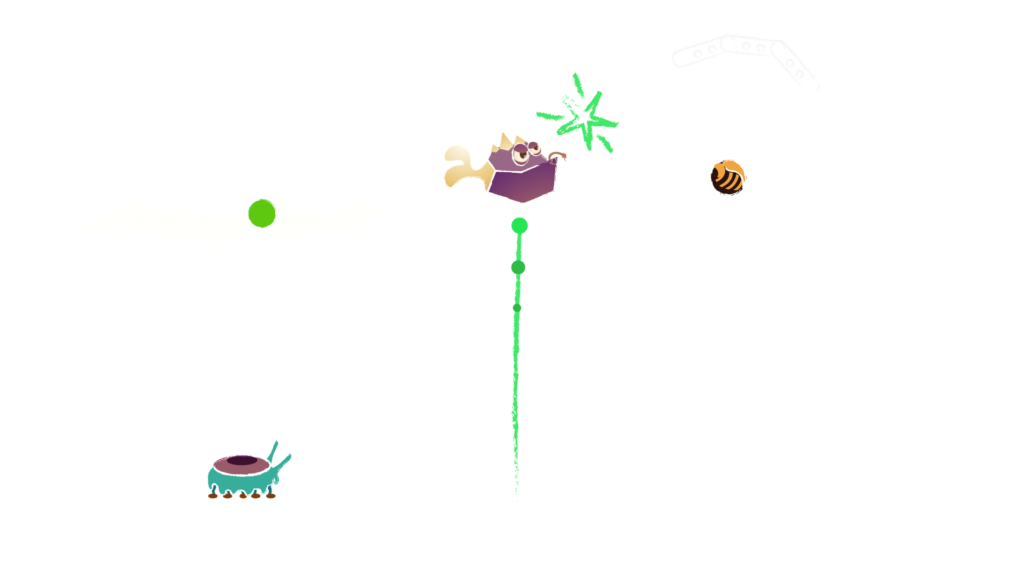
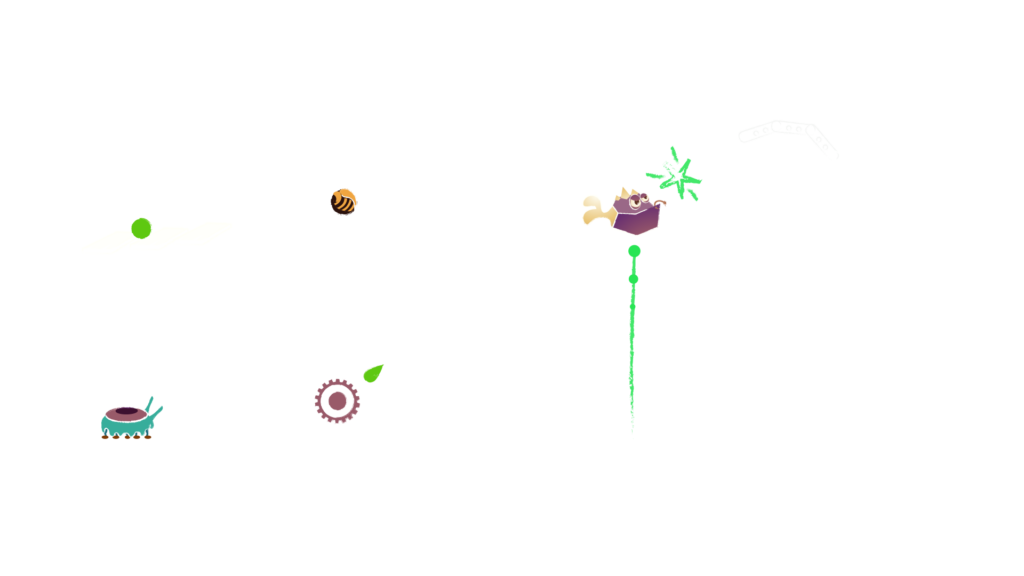
Puzzle 5 hint updated (see the before and after below). Given the puzzle’s complexity, i divided the hint into two parts to improve clarity and reduce cognitive load.
I also created hints for two additional puzzles to maintain consistency across the hint system.
Intro Cutscene Update.
I updated the intro cutscene with closed captions and voiceover to improve narrative clarity and keep players engaged through the opening sequence.
Planned further actions
Phase 2: Usability Validation & Point System Design
PlaytestCloud Usability Study
Following the Phase 1 changes, I ran a usability playtest through PlaytestCloud to validate the improvements and identify remaining friction points. I designed the test plan, defined the tasks, wrote the survey questions, and analyzed the results myself.
First-Time User Experience and Usability Testing results (PlaytestCloud)
Players were asked to complete 5 tasks and answer 17 survey questions. It was mainly a usability playtest with some onboarding-related tasks.
Target audience
Cohort 1 (Casual players): Players from United States, Canada, and United Kingdom between 16 and 40 years old playing Mobile Physics games, Hybrid Puzzle games, Casual Puzzle games, Puzzle games, or Cozy games. Skill level: casual players.
Top positive themes
- Players appreciate the unique, engaging intro and attractive visuals
- Music and sfx were described as smooth and enjoyable
Top negative themes
- Insufficient onboarding and unclear tutorials lead to early confusion
- Unresponsive controls cause major frustration and disengagement
- Puzzle goals, affordances, and recovery options are unclear, creating blocks and perceived softlocks
Advice for developers
- Prioritize making onboarding and tutorialization more explicit and accessible, ensuring that early objectives and core mechanics are clearly communicated through in-context guidance rather than optional help menus.
- Review and improve control responsiveness and input mapping, addressing technical issues that cause the character to freeze or become unresponsive.
- Clarify puzzle goals and feedback, and ensure robust recovery mechanisms are in place to prevent players from becoming blocked or perceiving softlocks.
- Focus on these areas to reduce early player confusion, frustration, and disengagement, while retaining the strengths of the game’s presentation and audio design.
Design Response: Puzzle Point System
The PlaytestCloud findings pointed to a clear gap: players lacked a sense of progression and didn’t always understand what they were working toward within a puzzle.
Two findings in particular drove this design decision – players were unclear on puzzle goals, and onboarding didn’t communicate objectives well enough. I designed a point system to address both problems at once.
Problem It Solves
Without visible progression feedback, players had no way to gauge whether their actions were meaningful. This contributed to perceived softlocks (players thought they were stuck when they were actually making progress) and early disengagement (players didn’t feel motivated to continue because there was no sense of accumulation or reward).
Design Approach
The point system gives players real-time feedback on their puzzle progress by awarding points for meaningful in-game actions. This serves two UX purposes simultaneously:
- Clarity – points act as implicit guidance, confirming that the player is on the right track without requiring explicit hints or tutorials. If a player interacts with something and sees points appear, they understand that action mattered.
- Motivation – visible point accumulation creates a sense of progress and momentum, encouraging players to continue exploring rather than giving up when they feel uncertain.
Implementation
I designed the point system and implemented it directly in Unity. The system will be included in the next game update.
Ongoing & Next Steps
Based on the research and design work completed across both phases, my current priorities are:
Measuring point system impact – when the point system goes live, I’ll be monitoring whether it affects first-puzzle completion rates and overall progression depth compared to the pre-implementation baseline.
Iterative usability testing – I plan to run additional PlaytestCloud sessions after each round of improvements to measure progress against the baseline findings and catch new friction points before they compound.
Outcome
This project is still in active development, so final engagement metrics are not yet available. However, the work completed across two phases has produced tangible results: improved touch interactions, updated hint illustrations, a redesigned onboarding cutscene, a validated set of priorities from usability testing, and a new puzzle point system designed and implemented directly in response to player feedback.
The case study demonstrates a complete research-driven design cycle: identifying a problem in analytics data → forming hypotheses → implementing initial fixes → validating with real players → designing a larger feature in response to findings → implementing it. As a solo practitioner handling research, design, and development, this project shows end-to-end ownership of the UX process from data to shipped feature.